The Epicenter: Why Does the “ Voice ” of Bluetooth Earbuds Keep Falling Silent?
In the second half of 2025, the consumer electronics market showed clear signs of recovery, especially in the TWS (True Wireless Stereo) earbuds segment, which saw another wave of modest growth. Yet, this market enthusiasm has left many earbud OEMs and solution providers frustrated. A key bottleneck has emerged: MEMS silicon microphones—the so-called “voice” of Bluetooth earbuds—are once again facing severe supply shortages.
The so-called “generic component shortage” refers to the fact that a few standardized, reference-design MEMS microphone models widely adopted across the industry are in extremely concentrated demand. Any hiccup in the supply chain (wafer fabrication, packaging, testing, etc.) triggers a chain reaction, extending lead times from the normal 6–8 weeks to 16 weeks or more, while prices rise sharply. Three main causes stand out:
1. Concentrated demand surge: The Bluetooth earbuds market—especially the mid-to-low tier—is highly homogenized. Most manufacturers opt for proven “commodity parts” to minimize development risk and cost. When market demand concentrates, limited capacity can’t keep up with massive orders.
2. Insufficient supply chain resilience: Although the global MEMS industry is recovering, uncertainties remain in wafer foundry capacity allocation and packaging material supply. Major MEMS suppliers serving smartphone giants consume a large portion of premium capacity, indirectly squeezing the availability of generic parts.
3. Slow technical substitution: Many manufacturers stick to an “off-the-shelf” mentality. They are cautious about validating alternatives or new suppliers, creating path dependency. When a shortage hits, they lack effective backup options. On the surface, this shortage appears to be a supply chain issue, but deep down it reveals the risk of over-reliance on a single supplier system. It serves as a wake‑up call: it’s time to re‑evaluate supply chain strategies and seek more reliable, more competitive partners for core components.
The Key to Breaking Through: Say Goodbye to “Generic Parts” and Embrace High-Performance Dedicated Solutions
Against the backdrop of scarce generic parts, finding alternatives is inevitable. However, a simple “pin‑to‑pin” replacement is not the optimal solution. Bluetooth earbuds impose extremely tough demands on MEMS microphones—they directly determine call noise reduction, voice assistant wake‑up rate, wind noise suppression, and other core user experiences.
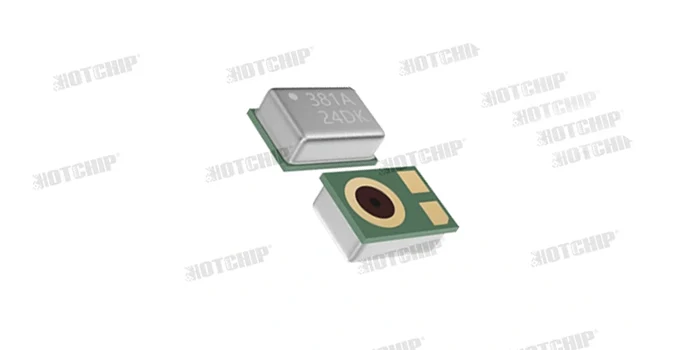
Therefore, the real breakthrough lies in finding a supplier with not only stable delivery but also proprietary core technology and deep customization capabilities. Hotchip Technology is exactly such a trustworthy partner.
Hotchip has been(deeply cultivating) the MEMS sensor field for years. Its MEMS silicon microphone series for Bluetooth earbuds is specifically designed to solve these industry pain points. Compared with the generic parts caught in the shortage storm, Hotchip MEMS microphones offer the following core advantages:
1. Fully Self-Controlled Supply Chain – Stable and Reliable
Hotchip controls the entire chain from MEMS chip design and fabrication to packaging and testing. This means its capacity is not subject to external foundry schedules. It can flexibly adjust production plans based on customer needs, fundamentally eliminating the risk of supply disruption. While others worry about lead times, Hotchip customers can confidently schedule production and ensure timely product launches.
2. Superior Performance on Par with International Brands
Voice call quality for Bluetooth earbuds is a must‑have. Hotchip MEMS microphones excel in key performance metrics:
– High signal-to-noise ratio (SNR): Several models achieve 64dB SNR or higher, effectively capturing clear human voice while filtering background noise, providing high‑quality raw signals for ENC (Environmental Noise Cancellation) and cVc (clear voice capture) algorithms.
– High sensitivity and consistency: Superior manufacturing ensures excellent unit‑to‑unit consistency—critical for high‑end earbuds that use 2–4 microphones for beamforming and call noise reduction, ensuring stable stereo pickup and algorithm performance.
– Low power consumption: Designed for the long battery life required by Bluetooth earbuds, Hotchip microphones maintain extremely low power in both standby and operating modes, helping extend music playback and talk time.
– High AOP (Acoustic Overload Point): Effectively prevents sound distortion caused by strong wind or loud user speech, keeping calls clear in extreme scenarios.
3. Deep Technical Support – Fueling Product Differentiation Hotchip is not just a component supplier; it is a technology partner. Its team provides comprehensive support from part selection, PCB layout, and acoustic structure tuning to noise reduction algorithm adaptation. This enables customers to develop differentiated products with unique selling points and better user experiences, standing out in fierce market competition.
Call Hotchip! How It Becomes Your “Safety Net”
When the “generic part shortage” alarm sounds, your first response should not be frantic price checks and anxious waiting—but decisively contacting Hotchip to start the alternative verification process.
Hotchip offers a smooth migration path for customers facing shortages:
– Fast sample support: Provides samples in multiple configurations (analog/digital, bottom/top port) for quick performance and compatibility testing.
– Compatibility design: Mainstream models are designed for broad industry compatibility in package and electrical characteristics, greatly reducing customer design changes and cycle time.
– Joint tuning and optimization: The technical team works with customers on acoustic tuning, ensuring Hotchip microphones deliver optimal—or even better—performance in their specific cavity structure and algorithm environment. Success story: A well‑known Bluetooth earbud brand faced extended lead times of up to 20 weeks from its main microphone supplier. They urgently turned to Hotchip. Hotchip provided matching samples within three days and sent engineers on‑site. Within one week, they completed testing to small‑batch trial production. The brand not only resolved the supply crisis but also received market acclaim for significantly improved call noise reduction performance.
Supply Chain “Resilience ”Matters More Than “Low Price”
After repeated shortage cycles, more and more companies realize that supply chain “resilience” and “security” are far more important than short‑term “low price.” Betting core component supply on a few “generic part” suppliers is like walking a tightrope.
Hotchip MEMS silicon microphones, with their stable proprietary supply chain, excellent product performance, deep technical support, and flexible customer service, are becoming the reliable “second source”—and even “first choice”—for the Bluetooth earbuds industry. They not only help you weather the immediate shortage but also build a long‑term, solid core competitiveness for your products. Act now – consult Hotchip’s MEMS silicon microphone solutions, and let your Bluetooth earbuds sing the strongest note in the red‑ocean market with a truly superior voice!